Dec, 02, 2025
In today's fast-paced life and high-intensity work pressure, more and more people are choosing to use scented candles to soothe their emotions and create a relaxing environment. But do scented candles really relieve stress? What is the underlying principle?
1. The Effect of Aromatherapy Candle Fragrance on Mood
The relaxing effect of scented candles primarily stems from the mood-regulating effect of fragrance. The sense of smell is directly connected to the limbic system of the brain, a crucial area responsible for emotions, memory, and stress responses. When fragrance molecules enter the nasal cavity, they are received by the olfactory nerves and transmitted to the brain, thereby activating or inhibiting emotion-related neural activity. For example, the active ingredients in natural plant fragrances such as lavender, chamomile, and bergamot can affect the secretion of neurotransmitters, making people feel relaxed, calm, and pleasant.
Furthermore, fragrance also has the effect of "emotional conditioning." When you repeatedly smell a certain fragrance while relaxing, the brain associates that scent with feelings of "comfort" and "slowing down." With prolonged use, the body automatically activates a "relaxation mode" whenever it smells the same fragrance, helping to reduce anxiety even under stress. The natural essential oils in scented candles evaporate steadily and diffuse moderately, being gentler than perfume and warmer than aromatherapy diffusers, thus providing a sustained soothing effect without irritating the sense of smell.
In short, fragrance is the core foundation of scented candles' stress-relieving properties. Scientific research and user experience demonstrate that fragrance does indeed have the potential to regulate emotions and improve mental tension. Scented candles, through their stable diffusion method, make this effect more readily accepted by the body, thus possessing practical value in stress management.
2. The Soothing Effect of Candlelight Atmosphere
Besides the fragrance itself, the candlelight of scented candles is another important reason for their relaxing effect. Candlelight is soft, flickering, and warm-toned. Compared to the "cold, stimulating" light sources like mobile phones, computers, and lamps, candlelight provides a greater sense of security and a "relaxation indicator." Scientific research indicates that warm-toned light can lower heart rate, allowing the brain to switch from a tense mode to a calming mode, making it particularly suitable for relieving stress and improving anxiety.
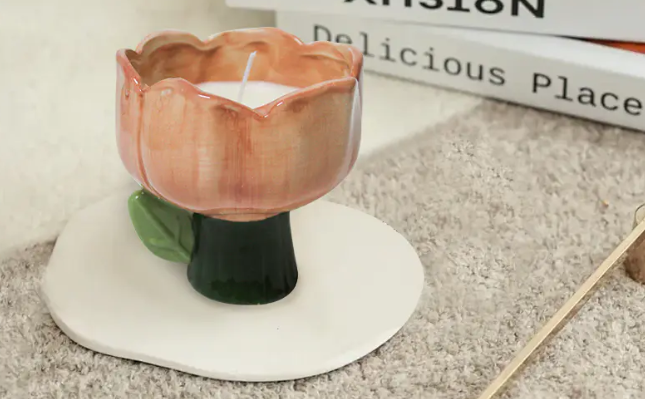
Meanwhile, the rhythm of the flame itself also has a stabilizing effect on emotions. The flame flickers gently but calmly, its rhythm similar to that of nature, such as ocean waves or wind rustling through leaves. This "slight and irregular" visual stimulation can reduce the brain's focus on stress, allowing attention to return to a calm state. For this reason, candlelight is often used as an aid in meditation, yoga, or psychological healing to help people enter a relaxed state more quickly.
Furthermore, candlelight can create a warm and safe environment. Many people's stress stems from external noise, bright light, and information overload. Turning off some lights and lighting a candle can quickly create a quiet and gentle environment, allowing the brain to rest. Especially when using scented candles at night, the warm light combined with the fragrance gradually relaxes the body, calms the mind, and can even improve sleep quality.
Therefore, the stress-relieving effect of scented candles is not limited to the fragrance; the visual atmosphere they create also plays a crucial role, making it a multi-sensory, natural, and effective way to relax.
3. Effects and Usage Suggestions for Aromatherapy Candle
Scented candles are increasingly seen as a "stress-relief miracle" because they work on three levels simultaneously: smell, sight, and emotion, creating a comprehensive relaxation experience. This multi-dimensional effect is especially valuable in a fast-paced life. For those under chronic stress, lighting a scented candle is not only an act of environmental improvement but also a signal to the brain to "relax," helping to restore a normal physical and mental state.
In practical use, choosing the right scent is also very important. For example:
Lavender, Chamomile: Suitable for relieving anxiety and promoting sleep;
Orange Blossom, Bergamot, Lemon: Can enhance feelings of pleasure and relieve fatigue;
Sandalwood, Cedarwood: Can calm the mind, suitable for meditation and contemplation;
White Tea, Cotton: Gentle and clean, suitable for high-pressure office environments.
To ensure the scented candle is most effective, it is recommended to maintain slight ventilation during use and avoid overly strong scents; burning for 1-2 hours each time is ideal. At the same time, choose natural waxes such as soy wax, coconut wax, and beeswax to avoid the potentially irritating odor of cheap paraffin. Trim the wick to 5-7mm before use to reduce smoke and make the fragrance cleaner and purer.
Scented candles do have a stress-relieving effect, but they are not medicine; rather, they are a lifestyle adjustment tool. By choosing a scent and environment that suits you and using them correctly, they can become an important aid in your daily stress reduction, rest, and relaxation.
Related Products

We sincerely invite partners at home and abroad to work together to create new value for candlelight economy!



 English
 русский