May, 15, 2026
Content
Halloween candles carry deep historical, spiritual, and cultural significance that stretches back over two thousand years. At their most fundamental level, they serve three interconnected purposes: they ward off evil spirits and provide protection to the living, they act as beacons to guide the souls of the dead, and they create the atmospheric ambiance that defines Halloween as a holiday. Far from being mere decorations, Halloween candles are rooted in ancient Celtic, Christian, and folk traditions that assigned fire a powerful role in the boundary between the world of the living and the realm of the dead.
In the modern era, these original meanings have blended with contemporary celebration, making Halloween candles both a symbolic artifact and a popular decorative product. Understanding their full significance requires tracing their origins, examining their specific ritual uses, and exploring how their meaning has evolved into the present day.
The direct ancestor of Halloween is Samhain, a Celtic festival celebrated on the night of October 31st, marking the end of the harvest season and the beginning of the dark half of the year. For the ancient Celts, who inhabited large parts of what is now Ireland, Scotland, and northern France, Samhain was one of the most important dates in the calendar — a liminal moment when the boundary between the living world and the Otherworld was believed to be at its thinnest.
On Samhain night, the souls of the dead were thought to walk the earth again, and supernatural beings including spirits, fairies, and demons roamed freely. Fire was central to the Celtic response to this perceived threat. Druids and community members gathered on hilltops to light large sacred bonfires, which served multiple functions: they purified the community, drove away malevolent spirits, and provided light against the encroaching darkness of winter.
Individual households were instructed to extinguish their hearth fires and relight them from the communal bonfire, symbolically renewing their protection for the coming year. When candles eventually became the primary portable light source in later centuries, they inherited this protective role — a small flame placed in a window was understood to keep evil spirits at bay and guide friendly ancestral spirits safely home.
In Celtic cosmology, fire was not merely a physical phenomenon but a supernatural force capable of bridging worlds. Flame could purify what was spiritually contaminated, illuminate what was hidden, and communicate across the boundary of death. A candle flame in the darkness of a Samhain night was therefore not decorative but actively spiritual — a tangible assertion of the living person's presence and protection against forces that darkness might bring.
As Christianity spread through Celtic Europe in the early medieval period, the Church absorbed and reinterpreted many pagan practices rather than eliminating them outright. In 835 CE, Pope Gregory IV officially established November 1st as All Saints' Day (also called All Hallows' Day), and November 2nd became All Souls' Day — a day of prayer for the souls of the faithful departed who were believed to be in purgatory.
The night before All Hallows' Day — October 31st — became known as All Hallows' Eve, eventually contracted to Halloween. During this Christianized observance, candles took on new but related significance. Lighting a candle for the dead became a widespread practice across Catholic Europe, especially in Ireland, England, Spain, and Latin America, where families would place lit candles on graves or in windows to illuminate the path of deceased loved ones returning temporarily to visit their families.
In medieval England and Ireland, a tradition called "souling" involved poor people going door to door on All Souls' Day, offering prayers for the homeowners' deceased relatives in exchange for soul cakes — small pastries. Candles were lit throughout the night during vigils held in churches and homes, maintained to honor the souls of those who had died during the past year. This practice of the candlelit vigil for the dead is one of the most direct forerunners of the Halloween candle as understood today.
In parts of Spain and Latin America, this tradition survives intact as Día de los Muertos (Day of the Dead), where elaborate altars called ofrendas are decorated with dozens of candles to welcome back the spirits of deceased family members. The marigold-lined paths lit by candles are explicitly understood as guiding lights for souls navigating back to the world of the living — a living continuation of the Halloween candle's original meaning.
No discussion of Halloween candle significance is complete without exploring the jack-o'-lantern, which is essentially a candle-lit carved gourd or pumpkin and the single most recognizable Halloween symbol in the world. The jack-o'-lantern encapsulates the entire history of Halloween candle symbolism in one object.
The jack-o'-lantern originates from an Irish folk legend about a man called Stingy Jack, who was said to have tricked the Devil on multiple occasions. When Jack eventually died, he was denied entry to heaven because of his deceitful life, and the Devil — honoring an agreement — refused to take him to hell either. Jack was condemned to wander the earth forever in the darkness between worlds, carrying only a glowing ember placed inside a carved turnip to light his way.
Irish immigrants who arrived in North America during and after the Great Famine of the 1840s brought this tradition with them. Finding that pumpkins were far more plentiful and easier to carve than turnips, they adapted the tradition using the native American squash. By the late 19th century, the carved pumpkin with a candle inside had become the defining Halloween symbol across the United States.
The candle inside a jack-o'-lantern carries a fascinating dual meaning that perfectly captures Halloween's ambiguity:
Today, according to the National Retail Federation, approximately 148 million Americans celebrate Halloween, and carved pumpkins with candles or candle alternatives remain among the top three most purchased Halloween decorations year after year, demonstrating the enduring cultural power of this tradition.
One of the most distinctive features of Halloween candles as a modern product category is their use of specific colors, each carrying its own layer of symbolic meaning. Halloween candle color symbolism draws from a mix of historical folk belief, occult tradition, and contemporary popular culture.
| Candle Color | Primary Symbolism | Historical / Folk Meaning | Common Halloween Use |
|---|---|---|---|
| Black | Death, mystery, the unknown | Used in mourning rituals; associated with the underworld | Altar displays, séances, dramatic decoration |
| Orange | Harvest, vitality, transformation | Color of autumn harvest; fire and the sun going south | General festive decoration, jack-o'-lantern pairing |
| Purple | Psychic power, spirit contact, magic | Associated with the veil between worlds in folk magic | Divination, spirit communication rituals |
| White | Purity, ancestral spirits, protection | Used in vigils for the dead; guides benevolent spirits | Ancestral memorials, ghost-themed displays |
| Red | Blood, danger, passion, demons | Associated with demonic entities and blood sacrifice in folklore | Vampire and horror themes, dramatic atmospheric lighting |
| Green | Witchcraft, nature spirits, eerie glow | Linked to witch imagery and poisonous plants in folk tradition | Witch-themed décor, haunted house atmosphere |
| Silver / Gray | Ghosts, moonlight, the faded past | Moonlit night associations; spectral presences | Ghost displays, cemetery scenes |
The pairing of black and orange — the two dominant Halloween colors — has deep roots. Black represents death and the darkness of the season, while orange represents the warmth of fire, the harvest, and the last light before winter's cold. Together, they encapsulate the central Halloween tension between life and death, light and darkness, celebration and fear.
Beyond mainstream cultural celebration, Halloween candles carry specific ritual significance in several folk and spiritual traditions that treat October 31st as a genuinely sacred occasion.
In many folk traditions across Europe, Latin America, and parts of Asia, Halloween or its regional equivalent is a time when families set up ancestral altars featuring photographs of deceased relatives, their favorite foods, and candles lit specifically to invite and honor their spirits. The candle in this context is not merely atmospheric — it is a direct communication tool. Its flame is understood to provide warmth and light to the visiting spirit, making the home feel welcoming and recognizable after the darkness of death.
In Mexican Día de los Muertos tradition, which shares deep roots with Halloween, thousands of candles are used to create paths of light from the cemetery to the family home, literally showing deceased relatives the way back. The scale of candle use — entire graveyards illuminated by individual family candles — underscores how seriously this guiding function is taken.
Contemporary Wiccan and pagan practitioners who observe Samhain as a religious holiday use candles as central ritual tools. Common Samhain candle practices include:
Halloween has long been associated with divination — the practice of seeking knowledge of the future or the unseen. Because the veil between worlds was believed to be thin, October 31st was considered an especially powerful time for omens and prophecy. Candle scrying, where a practitioner gazes into a flame or reads patterns in dripping wax, is one of the oldest forms of Halloween divination. A flame that burns steadily was considered a good omen; one that flickers and gutters indicated spiritual presences in the room; a flame that extinguishes unexpectedly warned of danger or death.
Beyond historical and spiritual meaning, candlelight has a distinct psychological effect that makes it uniquely suited to Halloween's atmosphere — and this is not coincidental. The association of candles with Halloween has been reinforced over centuries in part because of how candlelight actually affects human perception and emotion.
Unlike electric lighting, which produces a constant, even illumination, candlelight is inherently dynamic. The flame moves, flickers, dims, and brightens in response to air currents invisible to the naked eye. Shadows cast by candlelight shift and dance on walls in ways that electric light cannot replicate. This visual instability activates the human brain's pattern-recognition systems — the same cognitive processes responsible for seeing faces in shadows or interpreting ambiguous shapes as threatening figures.
Psychologists studying the effect of lighting environments on emotional state have found that flickering, low-level light increases feelings of both intimacy and mild anxiety simultaneously — precisely the emotional cocktail that Halloween seeks to produce. The candle creates an atmosphere that is simultaneously warm and threatening, comforting and eerie, which is why candles remain irreplaceable in Halloween settings even in an age of LED alternatives.
For most of human history, darkness was genuinely dangerous — a time when predators moved unseen and accidents were invisible until too late. Fire and candlelight represented the single most important human tool against the terror of darkness. On Halloween, the deliberate use of candlelight as the primary light source — rather than bright electric lighting — reconnects participants with this primordial relationship between flame and fear. The small circle of warm light surrounded by deep shadow is psychologically archaic in the most literal sense, tapping into fears and comforts older than civilization itself.
Modern Halloween candles are produced in a wide variety of forms, each associated with specific uses and meanings. Understanding the different types helps clarify how the significance of Halloween candles manifests in practical, everyday celebration.
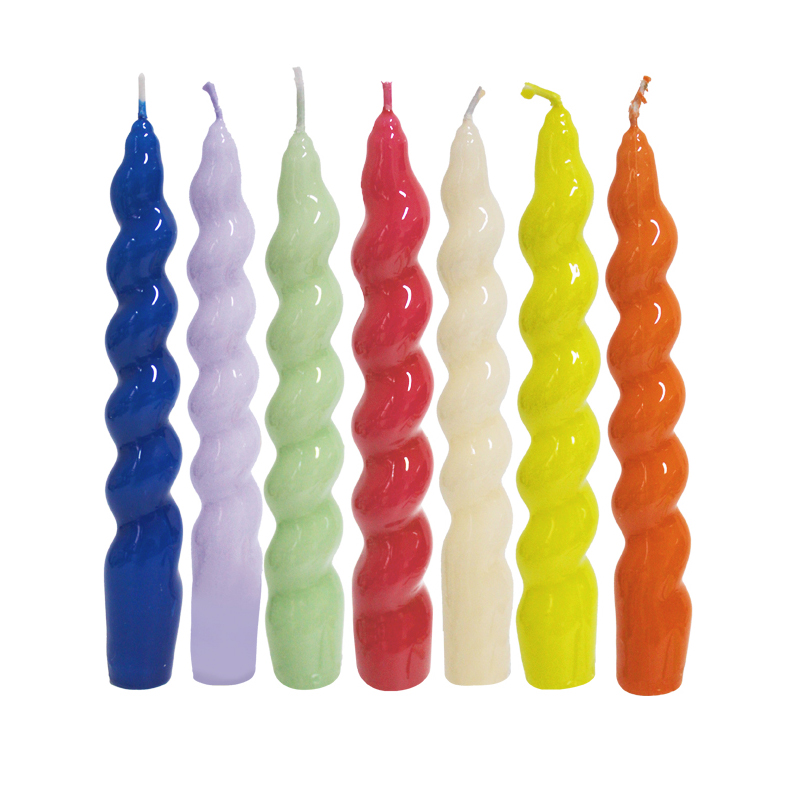
Tall, slender taper candles are the most traditional form associated with ritual and ceremony. On Halloween, black taper candles placed in candelabras evoke the Gothic aesthetic of haunted mansions and Victorian mourning parlors. White taper candles placed in windows maintain the ancient function of guiding ancestral spirits. Their height and the way they melt and drip adds a dramatic visual element that shorter candles cannot replicate.
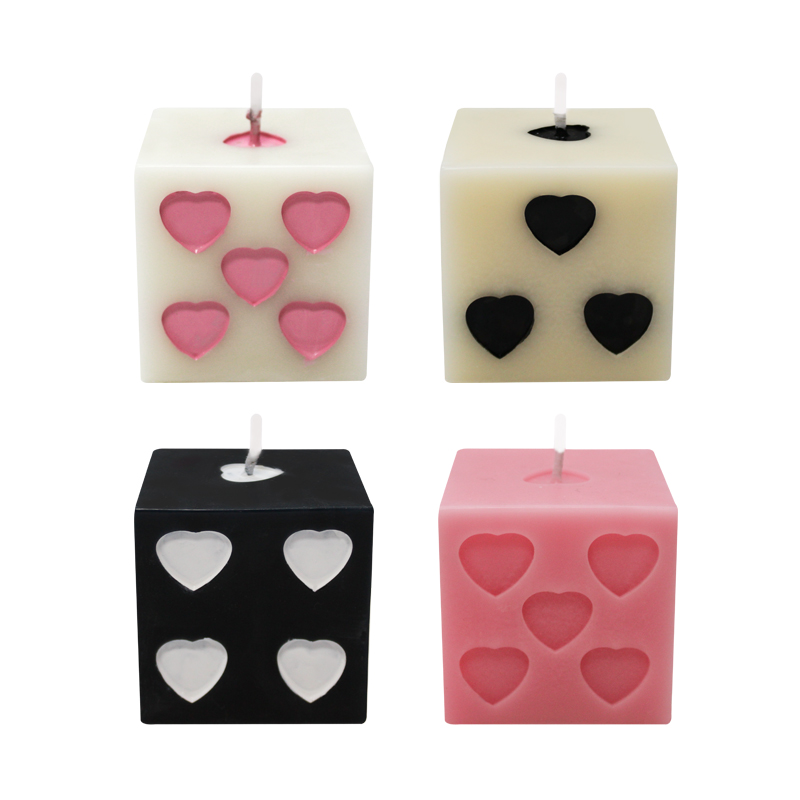
Thick pillar candles in Halloween colors — black, orange, deep purple — are frequently used as centerpieces for Halloween table decorations and altar displays. Their longer burn time (typically 40 to 60 hours for a standard 3-inch diameter pillar) makes them practical for extended Halloween celebrations and overnight vigils. They are often molded into Halloween-specific shapes including skulls, pumpkins, bats, and haunted houses.
Small votive candles and tea lights are among the most versatile Halloween candle formats. Placed inside glass holders, carved pumpkins, paper bag luminaries, or lanterns, they create fields of distributed light that large candles cannot achieve. Dozens of tea lights placed along a pathway or scattered across a table create an immersive atmospheric effect that is directly descended from the tradition of lighting candle-paths to guide the dead. Their low cost — typically available in packs of 50 to 100 — makes them practical for large-scale Halloween decorating.
The scented candle industry has enthusiastically embraced Halloween, producing candles with fragrances specifically designed to evoke the season. Common Halloween candle scents and their associations include:
The scented Halloween candle market has grown significantly, with the overall scented candle market in the United States valued at over $3 billion annually, with seasonal Halloween collections representing a major product launch period for candle manufacturers each fall.
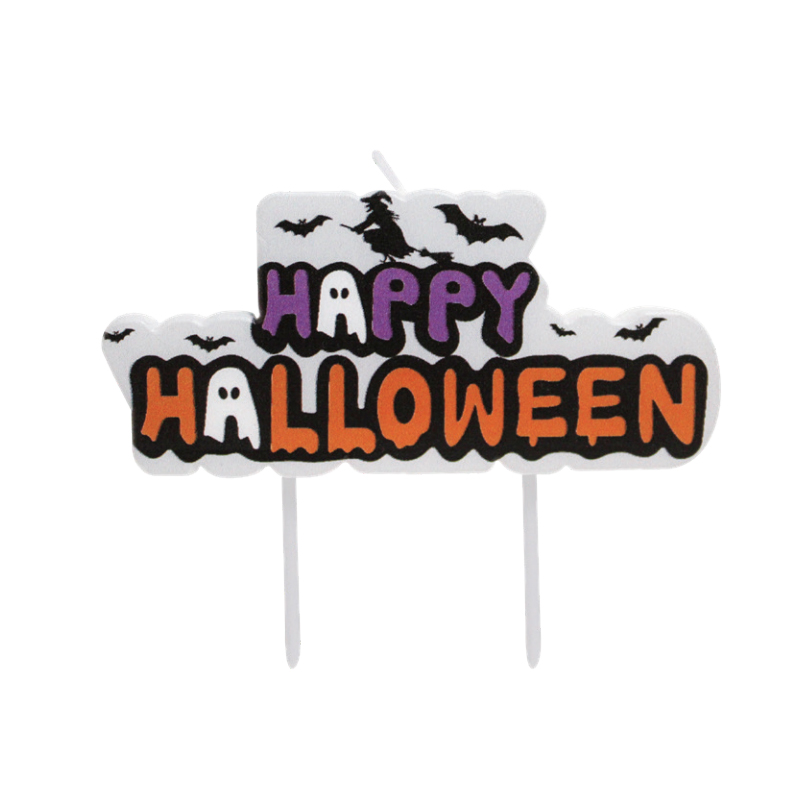
Modern candle manufacturing technology allows the creation of highly detailed molded candles in virtually any Halloween-related shape. Skull candles, witch candles, black cat candles, cauldron candles, and cemetery scene candles blur the line between functional candle and decorative sculpture. These novelty forms emphasize Halloween's contemporary identity as a celebration of playful horror imagery while retaining the flickering flame that connects them to the tradition's ancient origins.
While the Halloween candle as most people know it is predominantly rooted in Irish, British, and American tradition, analogous candle practices appear in cultures around the world that observe their own versions of a feast of the dead at the autumn equinox or around November 1st.
| Country / Culture | Festival Name | Candle Role | Timing |
|---|---|---|---|
| Mexico | Día de los Muertos | Path candles guide spirits home; altar candles honor the dead | November 1–2 |
| Ireland / UK | Halloween / Samhain | Window candles welcome spirits; jack-o'-lanterns ward evil | October 31 |
| Poland | Zaduszki (All Souls' Day) | Candles placed on every grave in the cemetery to honor the dead | November 1–2 |
| China | Ghost Festival (Zhongyuan) | Floating lotus candles guide hungry ghosts; incense and candles on altars | 15th day of the 7th lunar month |
| Japan | Obon Festival | Chōchin lanterns (lit with candles) guide ancestral spirits home and back | August 13–16 |
| Guatemala | Día de los Muertos | Candles lit at gravesites; elaborate cemetery vigils through the night | November 1 |
| Italy | Ognissanti / Commemorazione dei Defunti | Families light candles at graves; some regions leave candles lit at home | November 1–2 |
The near-universal appearance of candle-lighting practices in festivals of the dead across radically different cultures suggests that the symbolic connection between flame and the honoring of the deceased is deeply rooted in human psychology rather than being the product of any single cultural tradition. Light in darkness is simply one of the most natural and universal symbols of remembrance, presence, and continuation that humans have ever devised.
In the 21st century, Halloween candles have evolved into a major consumer product category that blends ancient symbolism with contemporary home décor trends. The modern Halloween candle serves its traditional symbolic functions while also functioning as an aesthetic object that reflects the homeowner's personal style and seasonal engagement.
Halloween has undergone a significant transformation over the past three decades, evolving from a primarily children's holiday centered on trick-or-treating into a major adult home-decorating event. Americans spend an estimated $3.6 billion on Halloween decorations annually, with candles and lighting consistently ranking among the top spending categories. This shift has been driven partly by social media platforms where elaborate Halloween home decoration has become a popular form of personal expression.
The styling of Halloween candles in home decoration tends to follow two broad aesthetic directions that reflect the holiday's dual nature:
The growth of flameless LED candles has introduced a practical alternative to real-flame Halloween candles, particularly for use with jack-o'-lanterns displayed outdoors, in windy locations, or in homes with young children. Modern LED candles have improved dramatically in realism — flickering flame algorithms and warm amber light output closely mimic the visual experience of a real candle flame.
While flameless candles lack the spiritual and ritual connotations of a real flame — they cannot meaningfully serve as beacons for spirits or tools for divination in traditional practice — they fully retain the atmospheric and symbolic visual function of Halloween candles for secular celebration. Their safety advantages make them the preferred choice for outdoor decoration, where an unattended real-flame candle poses a fire risk.
For those who wish to use Halloween candles in ways that honor both their historical significance and practical safety requirements, the following guidance covers the most important considerations.
The United States Fire Administration reports that Halloween is one of the peak periods for residential candle fires, with the combination of costumes, decorations, and distraction creating elevated risk conditions. Essential safety practices include:
The Halloween candle is one of the oldest continuous symbolic objects in Western culture. From the sacred bonfires of Celtic Samhain through the Christian vigil candles of All Souls' Day, through the carved turnip lanterns of Irish folk tradition to the modern jack-o'-lantern and scented pillar candle, the flame at Halloween has never ceased to carry meaning.
That meaning is layered and sometimes paradoxical — the Halloween candle protects and invites, threatens and comforts, wards off evil and calls the beloved dead home. It sits at the intersection of the living and the dead, the natural and the supernatural, the fearful and the festive. This complexity is precisely what makes it so enduring as a symbol.
Whether used in a solemn ancestral ritual, placed inside a grinning pumpkin on a front porch, or simply chosen for its evocative pumpkin-spice scent and atmospheric orange glow, the Halloween candle connects every contemporary celebrant to an unbroken chain of human beings who have, for more than two thousand years, responded to the darkest, most spiritually charged night of the year by lighting a flame.

We sincerely invite partners at home and abroad to work together to create new value for candlelight economy!



 English
 русский